Make Sense of Math: Holidays in Middle School Math
Showing posts with label Holidays in Middle School Math. Show all posts

middle school math awards

End of Year Math Awards for Middle School Math Classrooms

As the school year wraps up, many teachers look for meaningful ways to recognize student growth in math. End-of-year math awards are a simple, effective way to celebrate effort, improvement, and achievement while reinforcing a positive classroom culture.


In middle school math, students often make significant progress in problem-solving, reasoning, and confidence — even when that growth isn’t fully reflected in final grades. Thoughtful classroom awards help highlight that progress and encourage a growth mindset. Recognizing perseverance, collaboration, and mathematical thinking can be just as impactful as recognizing academic performance.


You don’t need a formal ceremony to use math awards. Many teachers present certificates during a regular class period, share a brief comment about each student’s strengths, and allow time for photos or reflection. Even small moments of recognition can make a meaningful difference for students in grades 6–8.


If you want an easy, ready-to-use option, I created a set of FREE Middle School Math Awards designed specifically for 6th, 7th, and 8th grade classrooms. This resource includes printable math certificates and editable PowerPoint versions so you can customize student names. The awards recognize both academic skills and character traits such as effort, persistence, and positive participation in the math classroom.


You can find them HERE:

Middle School Math Awards

Using end-of-year math awards helps students leave your classroom with a clear sense of accomplishment, confidence, and pride in their mathematical growth.

How to keep students in engaged in middle school math during halloween


How to Keep Students Engaged in Math During Halloween Week

Halloween week in middle school can be one of the toughest times to keep students focused. The excitement is high, energy levels spike, and attention spans drop fast. But instead of fighting the Halloween hype, you can use it to your advantage. With the right mix of structure and creativity, your students can stay engaged, learn, and even have fun while doing math.


Channel the Halloween Energy

Trying to power through your normal lessons rarely works this week. The key is to lean into the energy and give it a productive direction. Themed math lessons turn distractions into motivation—students are more likely to participate when lessons feel festive and relevant.


Keep Routines Steady

Consistency is your best friend. Start class the same way you always do—with bell ringers, clear expectations, and familiar transitions. Routine provides a sense of stability even during the most exciting weeks of the school year.


Use Short, High-Energy Activities

Avoid long lectures or extended worksheets. Instead, try math stations, task card games, or partner challenges. Short, varied activities give students chances to move and reset their focus. They’ll stay engaged longer, and you’ll get quick formative feedback on who’s mastering the content.


Add a Light Halloween Twist

You don’t need to decorate the entire classroom or plan an elaborate party. Simply changing the context can make math more fun. Try problems involving:

  • Candy ratios and percentages

  • Pumpkin prices and proportions

  • Graphing ghosts or bats on the coordinate plane

These quick tweaks make ordinary review feel exciting and new.


Encourage Reflection

Build in moments for students to connect math to real life. Have them write short reflections like:

“How did you use math in your Halloween prep?”
They might talk about estimating candy bags, dividing treats with friends, or calculating decoration costs. Writing helps strengthen mathematical reasoning and reflection—without adding extra grading.


Ready-to-Use Halloween Math Activities

If you’re short on prep time (because, let’s face it, October gets busy!), I’ve created a few classroom-tested resources that make Halloween math both engaging and effective:

🎃 Halloween Activities for Grades 6–8 (Differentiable)
🧡 Halloween Adding and Subtracting Integers Coloring Activity
👻 Halloween Scientific Notation Conversions Coloring Activity
🕸️ Halloween Graphing Linear Equations Mystery Picture


Each activity reinforces key middle school math standards, looks festive, and keeps students learning even when they’re full of Halloween energy.


Final Thoughts

Halloween week doesn’t have to be chaotic—it can be an opportunity to create memorable, meaningful math experiences. With a little planning, a solid routine, and a sprinkle of creativity, you can keep students engaged and excited about math all week long.

first day of middle school math class

What to Do on the First Day of  Middle School Math Class

If you start the first day of math class with a syllabus and a pretest...you are going to have students shut down on day one. The first day sets the tone for the entire school year. Middle school students, in particular, walk into math class with a wide mix of emotions: excitement, nervousness, and sometimes even anxiety. As teachers, we have an incredible opportunity to make that first impression a positive one.


So, what should middle school math teachers actually do on day one? The answer comes down to two key priorities: building relationships and establishing routines. When students feel connected and know what to expect, they are more willing to engage, take risks, and develop confidence in math.


Let’s break down what this looks like in practice.

1. Building Relationships on Day One

Middle schoolers want to know their teacher cares about them before they care about math. Strong relationships are the foundation for engagement and classroom management. When students feel seen and valued, they are more likely to participate, persist through challenges, and take ownership of their learning.


Here are a few ways to connect on the first day:


  • Greet students at the door. A smile and personal hello make students feel welcome right away.


  • Share about yourself. Talk briefly about why you love math or a personal struggle you overcame. Students respect teachers who are real.


  • Use an activity that gets students talking about themselves. One of my favorites is All About Me: Math StyleStudents introduce themselves math style. Great for building classroom community and making math class engaging from day one. 


Relationship-building doesn’t need to be complicated—it’s about showing students from day one that you value them as people.


2. Establishing Routines Early

Relationships set the tone, but routines keep your classroom running smoothly. Middle school students thrive on structure and predictability. The first day is the perfect time to model and practice the routines that will support learning all year.


Here are a few routines worth practicing on day one:

  • Entering the classroom: How should students come in, find their seats, and get started?

  • Materials: Where do supplies live, and how are they used?

  • Transitions: What does moving between activities look and sound like?

  • Attention signals: How will you get everyone’s focus quickly and respectfully?

When you introduce an activity like All About Me or a collaborative math task, use it to model these routines in action. For example, if students are rotating through stations, demonstrate how to transition before they begin. This way, you’re teaching expectations while also engaging students.


3. Engaging Students in Math from the Start

While it’s tempting to save “real math” for later in the week, doing math on day one sends a clear message: this class is about learning, not just rules. The key is to start with activities that are approachable but still meaningful.


Some ideas include:

  • Low-floor, high-ceiling problems that every student can start, but that allow for multiple strategies and solutions.  These Back to School Math Activities are perfect to engage your students from day one. 

  • Math talks or puzzles that encourage discussion and reasoning instead of just finding answers.

  • Collaborative problem solving where students work in pairs or groups, helping you observe teamwork and communication.

By starting with an engaging math activity, you show students that math class is a place for thinking, sharing, and exploring—not just memorizing formulas.


4. Reflection and Community Building

The way you end class matters just as much as how you begin. A short reflection gives students the chance to process and share, while also reinforcing the idea that their voice matters.


Here are a few easy reflection prompts for the first day:

  • “One thing I learned about my classmates today is…”

  • “One thing about me in math is…”

  • “Something I’m looking forward to in this class is…”

You can collect responses on notecards, exit slips, or even through a quick partner share. This not only builds community, but it also gives you insight into your students’ attitudes and expectations.


5. A Sample First Day Plan

Here’s how you might put it all together:

  • Welcome & Greeting (5 min): Meet students at the door and introduce yourself.

  • Relationship Activity (15–20 min): Use All About Me: Math Style or a similar activity to learn about students.

  • Teach & Practice a Routine (10 min): Model and practice one key routine, like transitions or attention signals.

  • Quick Math Task (10–15 min): Engage students with a puzzle, number talk, or short problem-solving task.

  • Reflection & Share-Out (5–10 min): Have students reflect on what they learned and how they felt.


By focusing on just a few well-chosen activities, you create a first day that is welcoming, structured, and engaging.

Conclusion

The first day of math class is your chance to set the foundation for the rest of the year. By prioritizing relationships and routines, and giving students a chance to do math right away, you create a safe and engaging classroom environment.


Remember—students won’t always remember what math problem you gave them on the first day, but they will remember how you made them feel. A thoughtful mix of connection, structure, and learning ensures your students feel welcome and ready to succeed in math. 

Want more middle school math ideas sent straight to your inbox?
⭐⭐ Join thousands of  teachers who get weekly tips, freebies, and inspiration. JOIN BELOW 
👇

effective middle school math review

How to Make Middle School Math Review Meaningful and Effective

Let’s be real—middle school math review can feel like a never-ending loop.


You’ve taught the concept, your students got it, and then a few weeks later... it’s like they’ve never seen it before. 😅


Sound familiar?


Here’s the thing: middle school math ath review isn’t just a few warm-up problems or a handful of spiral questions at the end of the week. It’s so much more than that. When done right, 6th,  7th, and 8th grade math review can solidify understanding, strengthen connections, and boost student confidence.


So what makes end of year math review actually work?


Intetentional Math Review

Review shouldn’t be random or rushed. It should be built into your routine with purpose—targeting the concepts that need reinforcement the most.


Spiral Math Review

Instead of teaching a topic once and moving on, spiral review brings those core ideas back again and again in different contexts, helping students retain what they’ve learned.


Interactive Math Review Activities

Partner games, hands-on activities, and low-stakes practice can turn review into something students look forward to (yes, really!).


 Math Talk in Review

Review is a chance for students to explain their thinking and hear different strategies, which strengthens both their understanding and communication skills.


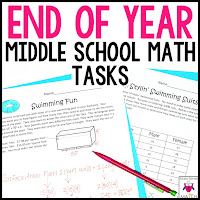
If you're looking for ready-to-use resources that make review meaningful and fun, I’ve got you covered. These middle school math review activities are designed to help students stay engaged while reviewing key concepts.


6th Grade Math End of Year Review Activities

7th Grade Math End of Year Review Activities

8th Grade Math End of Year Review Activities

MIDDLE SCHOOL MATH REVIEW ACTIVITY

Engaging End-of-Year Math Review for 6th Grade, 7th Grade & 8th Grade Math

End-of-year math review can be hard.
Worksheets feel repetitive.
Students are often checked out.


It can also be hard to find activities that actually review key concepts.


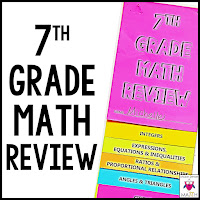
Math review flipbooks are a simple way to keep students engaged while reviewing.


Why Use Flipbooks for Middle School Math Review?

Traditional review methods, like packets and worksheets, can feel repetitive and overwhelming for students. Flipbooks provide a structured yet engaging way for students to organize and review important concepts in a hands-on format. Here’s why teachers love using them:


Comprehensive Topic Coverage 

Easy to Assemble 

Interactive Learning 

Perfect for Test Prep 

Flexible Use 


What’s Topics are Included in These Middle School Math Review Flipbooks?

Each grade level flipbook is specifically designed to cover essential math concepts in an easy-to-follow format. Here’s a sneak peek at what’s inside:


  • 6th Grade Math Flipbook: Covers fractions, decimals, percents, absolute value, unit rates, one-step equations, inequalities, geometry, statistics, and more.


  • 7th Grade Math Flipbook: Focuses on rational numbers, multi-step equations, proportional relationships, probability, surface area, volume, and statistics.


  • 8th Grade Math Flipbook: Includes linear equations, systems of equations, exponents, functions, transformations, the Pythagorean Theorem, and more advanced topics.


How to Use These For End of Year Math Review

Not sure how to incorporate these flipbooks into your lesson plans? Here are some easy and effective ways to use them:

📌 End-of-Year Review 

📌 Test Prep 

📌 Small Group or Partner Work 

📌 Independent Practice 


6th, 7th, and 8th Grade Math Review Made Easy

See the flipbooks for your grade level below. 

6th grade math review activity flip book
7th grade math review activity flip book
8th grade math review activity flip book

Ready to make math review stress-free and effective? Grab your flipbooks today and watch your students thrive!


SAVE FOR LATER


Halloween Middle School Math Project

Middle School Math Halloween Project


Pumpkin Math

Are you looking for an exciting way to engage your middle school math students this Halloween season? Look no further! Pumpkin math is a perfect middle school math Halloween activity that combines the magic of Halloween with the power of mathematics.

This activity is best for middle school math students who have the following skills.


Skills:

  • Percent error calculation
  • Create a histogram
  • Understand outliers
  • Calculate mean, median, mode and range
  • Create and have a basic understanding of box-and-whisker plots.
  • Calculate cost of multiple pumpkins given unit price.
  • Calculate cost of time to carve pumpkins give unit rate.


Supplies:

  • Pumpkins (you can do one per class, per group or per student)
  • String and ruler (to measure circumference)
  • Carving supplies
  • Pumpkin Math Packet


NOTE: If you have multiple classes then you can share the data between classes if you need more data.


You can also make up the seed count data if you’re not really into carving pumpkins


Activities:

Estimate and Percent Error: Students estimate the weight, circumference and seed count of a pumpkin.  Students then determine the actual weight, circumference and seed count of a pumpkin and calculate their percent error.


Data Analysis: Students create and analyze a histogram of percent error (either of weight, circumference and seed count).


Real – World Problems: Students solve real-world pumpkin math problems. Students calculate cost of pumpkins given the unit cost.  Students also determine the time to carve multiple pumpkins given the unit rate.


Seed Statistics: Students calculate the mean, median, mode and range of seed count collected from various pumpkins. Students will then create and analyze a box-and-whisker plot.


A data sheet is included as a way for students to record data collected from other students.


Time: If you choose to complete the whole packet, I would set aside 3 math periods for this activity. One for the pumpkin carving and two to gather data, complete the packet and have a class discussion if you choose.


Grab your Pumpkin Math Packet HERE or on TPT

Save this post for later

Halloween Middle School Math Project

back to school middle school math activities


Back to School Middle School Math Activities

Get ready to conquer back to school with these engaging and exciting middle school math activities.

Your students will be learning, problem-solving and focused in your math class as you kick off the start of the year.


These are approachable for various skill levels in grades 6 - 8. Increase rigor by requiring models, equations and justification.


back to school middle school math activities

Check Out These Activities
  • Seating Chart Logic Puzzle: Students determine the first and last names of students as well as their assigned seat number. Included is the logic puzzle with and without the grid. Great problem to have students practice constructing viable arguments.

  • Number Riddles: In these number riddles students are given certain clues about a specific number. Remembering division rules will help students solve these riddles. If students don’t remember their division rules, have them work the
    problem out through logic. Great problem to have students practice justifying.

  • Back to School Snack: Students are given clues about how many candies were in the candy dish. Students must work backwards to solve this puzzle. Excellent problem to have students practice modeling and reasoning.

  • Home Lunch: Given different options for sandwiches, fruits, and dessert. Students determine how many different combinations are possible. Perfect problem to have students show a model.

  • Also Included: Math Mindset Questionnaire: Are your students teachable? Evaluate your students’ math mindset.


check out the middle school math back to school activities

Save this post for later

middle school math back to school activities pin

Middle School Math Summer Packet Review

Consistency is the Key to Fight the Summer Math Slide

Fight the summer math slide. 

Research shows that 2.5 months of math skills are lost during the summer. Yikes! That is  A LOT!

Don't let that happen to your middle school math students. 

Get them engaged during the summer by doing a little math every day.

Consistency is the key to success.

Encourage them to consistently fire up their brain every day and problem-solve through math questions. This will lead to greater success.

As John Maxwell stated, "Small disciplines repeated with consistency every day lead to great achievements gained slowly over time.” 

No need to overwhelm them with a huge project, just have them do a problem a day.

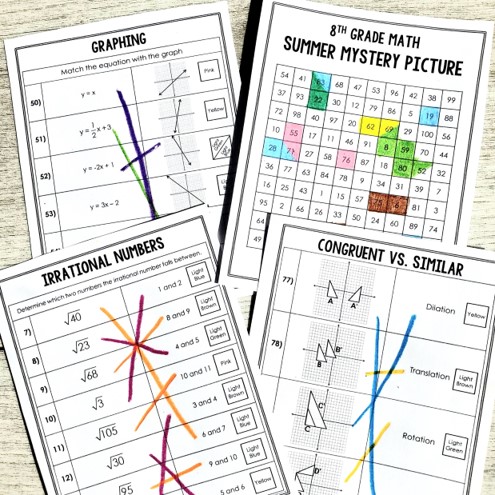
I love these fun summer math packets for 7th grade math and 8th grade math.  These contain 100 questions each.  Just enough for the summer break. 

Students will stay motivated as they color a square on a grid according to their answer. After they complete the 100 questions they will reveal a fun summer mystery picture.

 7th Grade Math Summer Packet

  • Adding and Subtracting Integers
  • Multiplying and Dividing Integers
  • Simplifying Expressions
  • Solving Equations
  • Solving & Graphing Inequalities
  • Unit Rates
  • Percents
  • Constant of Proportionality
  • Proportionality
  • Circumference & Area of Circles
  • Triangles
  • Surface Area & Volume
  • Probability
  • Statistics

7th Grade Math Summer Packet Review

 8th Grade Math Summer Packet

  • Rational vs Irrational
  • Irrataional Numbers
  • Exponent Properties
  • Scientific Notation Operations
  • Functions?
  • Rates of Change
  • Initial Values
  • Graphing
  • Equations with Variables on Both Sides
  • Systems of Equations
  • Angles
  • Congruent vs. Similar
  • Pythagorean Theorem
  • Volume
  • Scatter Plots

8th Grade Math Summer Packet Review

Take a Look at these Summer Packets


Save This Article

Save these tips and ideas to your favorite classroom Pinterest board. Come back and reference them for ideas on 7th grade math summer review and 8th grade math summer review.


5 Valentine's Day Activities for Middle School Math

Middle School Math Valentine's Day Activities

Kids (even older kids) love holidays! In the words of my child, "I'm excited for this holiday to be over so we can celebrate the next holiday."  Valentine's day in middle school math can be just as exciting.  You want to make sure to continue learning the math curriculum, and practicting math skills, but you can do it in a fun and engaging way.


Check out these 5 fun activities for the Valentine's Day holiday.


Heart Puzzle for Solving Equations

This fun heart algebraic equations puzzle focuses on solving equations with the distributive property and integers. A perfect way for your middle school math students to practice and review solving equations.  Once students calculate the correct answer to the math problems they connect the solution and equation to form a heart.


Works great in math centers, small groups, or independent work.  A great activity for your middle school students on Valentine's Day. 


Valentine's Day Math Activities for Middle Schoolers


Heart Area Critical Thinking

Incorporate this ciritcal thinking Valentine's Day math activity into your lesson plans. Draw this heart on the board and have your students determine the area of the heart.  Students should justify their work. You can have students present the different ways that they determined the area, and as a class discuss how they are different and how they are the same.  

Valentine's Day Math Activity for Middle School
CLICK HERE TO DOWNLOAD THIS WORKSHEET FOR FREE

The Perfect Sugar Cookie - A fun way to incorporate area and volume

If you're ambitious as a teacher you can frost sugar cookies...with math.  Students will love this activity.  

Sugar cookies

To frost sugar cookies using area and volume complete the following:

  • Give the above heart area problem to your middle school students the day before Valentine's day. Use the approximate dimensions of the sugar cookies you will be frosting. Have them determine the area of the heart. 
  • After they have determined the area, have your middle schoolers calculate how much frosting is needed to make the perfect sugar cookie. They can determine the volume of frosting by calculating the product of the area of the base and the depth of the frosting they think will make the best cookie.  You can tell them this formula, or let them figure it out.  I always prefer letting them figure it out. 
  • As an added challenge, have your students determine how many tablespoons of frosting they will need. This can be calculated by converting cubic centimeters into tablespoons.  

  • On Valentine's day, bring cookies in the shape of large hearts for them to frost.  Bring a tablespoon and have them scoop out their pre-determined amount of frosting to give themselves the perfect sugar cookie.


Engaging Valentine's Day Math Worksheets

Check out these fun math activities and coloring worksheets to keep your middle schoolers working on math while celebrating the holiday. This is a great way to keep your middle school students engaged and reviewing essential skills. An answer key is also included.

In this Exponential Love Valentine's Day activity students will practice the exponent properties while coloring a fun conversation hearts coloring page. This is a fun way for your eighth graders to practice their fluency with the exponent rules. 


Valentine's Day Math Activities for Middle Schoolers

In this Change of Heart Valentine's Day Activity  your middle school math students will determine the percent change while coloring a fun heart coloring page. 

Add these to your lesson plans for early finishers or to supplement your math curriculum.

Fun Valentine's Day Math Activities


Conversation Hearts for Estimation and Probability

    Estimation: 

Fill a cylindrical jar with conversation hearts and have your students estimate the quantity. Have conversations with your students how they can use math to more accurately estimate. Don't tell them, just ask guided questions.  (Find the volume of the cylinder in terms of candy hearts.)


    Probability:

Conversation hearts are a perfect way to incorporate Valentine's day in your class with probability. Here are some questions you could use, but the options are limitless. You can take this as deep or as simple as you need to.  

  • If there are 5 blue out of 20 conversation hearts, what is the probability of picking one blue?  
  • What about picking two blues with replacing the first heart? 
  • What about picking two blues without replacing the first heart?  
  • Give every student their own pack of conversation hearts and have the students compare probabilities with their boxes. 
  • How does the sample size of their box compare to the data of the whole group?
conversation hearts

In Conclusion

These fun activities for Valentine's day are sure to engage your middle school math students.  From Valentine's Day math worksheets, holiday-themed math puzzles, decorating valentine cookies and estimating candy probability. These activities are a great way to keep your middle schoolers engaged and better than handing them a worksheet with irrelevant word problems.


Happy Valentine's Day :)


Save This Article

Use the image below to share these fun ideas for Valentine's Day activities that work great for 6th grade math, 7th grade math, and 8th grade math classroom.


5 Valentine's Day Activities for Middle School Math
Back to Top