Make Sense of Math: Math Teaching Tips
Showing posts with label Math Teaching Tips. Show all posts
How to spot middle school math misconceptions early

How to Spot Math Misconceptions Before They Show Up on a Test

Have you ever graded a math test and wondered, “How did so many students miss this?”

You taught the lesson. Students completed the practice. Everything seemed fine.

Then the test tells a different story.

The problem is that math misconceptions can stay hidden. Students may follow a procedure, copy an example, or even reach the correct answer without fully understanding the concept.

The good news is that misconceptions often leave clues before test day. Here are five ways to identify them early.

1. Ask Students to Explain Their Thinking

A correct answer doesn't always mean a student understands the mathematics.

For example, a student may solve an equation correctly but struggle to explain why the strategy works.

Instead of only asking for an answer, try questions such as:

  • How did you solve it?
  • Why does that method work?
  • Could you explain your thinking to a partner?

Listening to students' reasoning helps you notice misunderstandings that might otherwise go undetected.

2. Use Exit Tickets to Check for Understanding

Exit tickets are a quick way to identify math misconceptions before the next lesson.

The key is to include questions that go beyond routine computation.

For example, try asking:

  • Which student solved the problem correctly? Explain your choice.
  • How do you know this answer is reasonable?
  • What mistake did this student make?

These questions can provide a clearer picture of what students understand.

3. Look for Patterns in Student Mistakes

One wrong answer might be a calculation error. When several students make the same mistake, however, it may reveal a shared misconception.

Watch for errors such as:

  • Adding exponents when adding algebraic terms, rather than combining like terms correctly
  • Confusing slope and y-intercept
  • Treating proportional relationships as additive rather than multiplicative
  • Forgetting to distribute to every term

When you notice a consistent pattern, you can target the underlying misunderstanding instead of simply assigning more practice.

4. Use Error Analysis Activities

One of my favorite ways to identify misconceptions is to have students analyze incorrect mathematical work.

Show students a solution that contains an error and ask:

  • What went wrong?
  • Where did the mistake occur?
  • How would you correct it?
  • Why does your correction work?

Students sometimes recognize errors in someone else's work before they can identify similar mistakes in their own.

As a bonus, error analysis encourages valuable classroom discussions and mathematical reasoning.

If you're looking for prepared activities, you can explore the Make Sense of Math TpT store for error analysis resources.

5. Have Students Write About Math

Writing can help you see whether students truly understand a mathematical concept.

Try prompts such as:

  • Explain how you know a relationship is proportional.
  • Describe the difference between an expression and an equation.
  • Explain why your answer makes sense.

When students explain their reasoning in writing, it's often easier to see exactly where their understanding breaks down.

Math Writing Prompts for Middle School

If you're looking for ready-to-use math writing activities, check out these resources for your grade level.

Common Middle School Math Misconceptions

Some misconceptions to watch for include:

  • Believing proportional relationships are additive rather than multiplicative
  • Thinking every linear relationship is proportional
  • Confusing area and perimeter
  • Mixing up slope and y-intercept
  • Misunderstanding operations with negative numbers
  • Applying exponent rules where they don't belong, such as adding exponents when adding like terms

Recognizing these common errors can help you plan questions and activities that uncover student thinking before an assessment.

Why Identifying Misconceptions Early Matters

When misconceptions go unnoticed, students may build new learning on an incorrect foundation.

Eventually, those misunderstandings can appear on quizzes, tests, and other assessments.

By listening to explanations, using exit tickets, analyzing errors, and incorporating writing, you can identify misconceptions while there is still time to address them.

That's much better than discovering a misunderstanding after an entire unit has been taught.

Frequently Asked Questions About Math Misconceptions

What is a math misconception?

A math misconception is an incorrect understanding of a mathematical concept that can lead students to make repeated errors.

Why are math misconceptions difficult to identify?

Students can sometimes reach correct answers without understanding the reasoning behind a procedure. Misconceptions may remain hidden until students encounter an unfamiliar problem.

How can teachers identify math misconceptions?

Teachers can use classroom discussions, exit tickets, student writing, error analysis, and formative assessments.

What are some common middle school math misconceptions?

Common examples involve proportional relationships, integer operations, slope, exponents, area, and perimeter.

How can I prevent misconceptions from showing up on a test?

Use frequent checks for understanding and encourage students to explain why a strategy works. Look for patterns in errors and address them during instruction.

Save These Math Misconception Strategies

Save this article to your Pinterest board for ideas on formative assessment, error analysis, and spotting math misconceptions before test day.

How to use math talk in middle school math classrooms

How to Use Math Talk in Middle School Math (Simple and Effective)

If your students can solve a problem but can't explain why it works, they may need opportunities to deepen their understanding.

That's where math talk comes in. It is one of the simplest ways to help students build understanding, confidence, and problem-solving skills without completely changing your lessons.

What Is Math Talk?

Math talk means giving students opportunities to discuss their mathematical thinking. Instead of only writing answers or following steps, students explain their reasoning, compare strategies, and ask questions.

These conversations help students clarify their thinking, make connections, and understand why mathematical ideas work.

Why Math Talk Works

When students talk about mathematics, they get opportunities to:

  • Develop deeper conceptual understanding
  • Learn from other students' strategies
  • Build confidence when explaining their thinking
  • Use mathematical vocabulary in meaningful ways

Math talk also gives you insight into how students are thinking. You can identify misconceptions, ask follow-up questions, and adjust instruction as students discuss their strategies.

Simple Ways to Use Math Talk Without Adding More Work

You don't need a separate math talk lesson. Start with a few small changes to your existing routine.

1. Turn and Talk

After students solve a problem, have them turn to a partner and explain how they approached it. This is a low-pressure way to involve more students, especially those who hesitate to share with the whole class.

2. Ask One Simple Question

Instead of stopping at “What's the answer?” ask:

  • How did you get that?
  • Why does that work?
  • What did you notice?

One thoughtful question can change the depth of a mathematical discussion.

3. Show Different Strategies

Have students share different ways to solve the same problem. Comparing solutions helps students recognize that math isn't always limited to one method, and it encourages flexibility in their thinking.

4. Normalize Mistakes

Math talk is most effective when students feel comfortable sharing unfinished ideas. Make room for statements like “I'm not sure” or “I tried this.” Then use those contributions as opportunities to explore and learn together.

A Simple Way to Get Started

I created a free set of 20 Math Talk Prompts that you can use to help students explain their thinking and share ideas.

Download the FREE Math Talk Prompts and start building more discussion into your lessons.

Free printable 20 Math Talk Prompts for middle school math teachers

Final Thoughts

Math talk doesn't have to be complicated. You don't need a new curriculum or a complete lesson overhaul.

Small changes—asking deeper questions, giving students time to explain, and allowing different ideas to be heard—can make a meaningful difference in mathematical understanding.

Want More Middle School Math Ideas?

Join the Make Sense of Math newsletter for weekly teaching tips, freebies, and classroom ideas.

Why middle school math students lose motivation

Why Your Middle School Math Students Are Losing Motivation (and What to Do About It)

If your students seem less engaged lately, you're not imagining it.

Participation drops. Effort fades. And suddenly, even some of your strongest students seem checked out.

This can be especially noticeable toward the end of the school year, and it doesn't necessarily mean students are lazy or don't care.

Let's look at some reasons students may lose motivation in math and what you can do to help them reengage.

Why Student Motivation Drops in Math

1. Students Feel Overwhelmed

By spring, students have covered months of mathematical content, including integers, fractions, ratios, equations, and geometry.

For some students, those concepts still aren't fully understood.

Instead of asking for help, they may think, “I don't understand any of this, so what's the point?”

2. Small Learning Gaps Become Bigger Problems

A student who never fully understood integer operations may now be trying to solve equations, work with slope, and apply several mathematical skills at once.

Those earlier misunderstandings can make new mathematics feel increasingly difficult.

As frustration grows, motivation can decrease.

3. Students Lose Confidence

Middle school students may begin labeling themselves with statements such as “I'm bad at math” or “I just don't get it.”

Once students believe they aren't capable of succeeding, they may stop putting forth the effort needed to improve.

4. The Learning Format Feels Repetitive

Students may begin thinking, “It's just another worksheet,” or “We're doing the same thing again.”

Even when the mathematical content is different, the classroom experience may start to feel repetitive.

Sometimes changing how students interact with the math can help them become interested again.

5 Ways to Reengage Middle School Math Students

1. Focus on Small Wins

Instead of trying to review everything at once, narrow your focus.

Choose one skill, one concept, or one meaningful activity.

Help students experience success and recognize their progress. Small wins can build confidence and momentum.

2. Change the Learning Format

Sometimes the problem isn't the content you're teaching. It's that every lesson begins to feel the same.

Consider incorporating:

  • Math foldables or flip books
  • Task cards
  • Partner activities
  • Short mathematical challenges
  • Math stations and collaborative review

A different format can help students approach familiar mathematics with renewed interest.

3. Make Math Review Feel Manageable

Large review packets can feel overwhelming, particularly for students who already lack confidence.

Instead, break review into smaller sections, give clear directions, and provide structured support.

When students feel that they know how to begin, they're more likely to participate.

4. Build Student Confidence

Look for opportunities to help students experience meaningful mathematical success.

Begin with accessible problems, include visual models, and gradually increase the challenge.

Celebrate improvements in understanding and mathematical reasoning, not just correct answers.

5. Lower the Barrier to Participation

Students who are reluctant to participate may need an easier way to get started.

Try quick warm-ups, low-risk discussions, and opportunities to share ideas without fear of embarrassment.

The goal is to help students begin thinking and participating again.

A Simple Way to Reengage Students in Math

One strategy I like at this time of year is structured, interactive math review.

Rather than overwhelming students with an entire curriculum at once, interactive review allows them to focus on manageable pieces of mathematics.

It also offers a different classroom experience from completing a traditional worksheet.

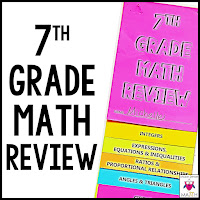
Math review flip books are one option for keeping students focused while reviewing important skills.

Middle School Math Review Flip Books

If you're looking for low-prep math review activities, check out these flip books for 6th, 7th, and 8th grade.

Final Thoughts on Math Motivation

When students seem unmotivated, there may be more going on beneath the surface.

They may feel overwhelmed, behind, or unsure where to start.

Your goal doesn't have to be fixing everything at once.

Focus on creating opportunities for success, making learning feel manageable, and helping students believe they can continue improving.

Sometimes a few intentional changes are enough to get students thinking and participating again.

Save These Middle School Math Motivation Tips

Save this post to your favorite Pinterest board for ideas on rebuilding student confidence and engagement, especially toward the end of the school year.

Why middle school math students lose motivation

How to Fill Learning Gaps in Middle School Math

Learning gaps are common in middle school math. Students miss instruction, concepts don’t fully click, or skills fade over time. The challenge is helping students catch up without reteaching everything or falling behind pacing.

The good news is that filling learning gaps does not always require starting over.

Focus on the Essentials

Not every gap needs full reteaching. Identify the key skills students must understand to be successful with current content. When you focus on what matters most, support becomes more manageable and less overwhelming.

Use Visual Supports

Visuals help students reconnect to prior learning quickly. Anchor charts, summary notes, and reference sheets give students something to rely on when they feel stuck. These tools build independence and confidence over time.

Spiral Skills Instead of Stopping

Stopping instruction for extensive reteaching can slow momentum. Instead, spiral important skills through warm-ups, practice problems, or short reviews. Repeated, targeted practice helps students strengthen earlier skills while continuing to learn new content.

Keep Practice Low Stress

Students are more willing to engage when practice feels safe. Games, task cards, and partner activities can reduce pressure and encourage participation. Confidence grows when students feel comfortable trying, making mistakes, and learning from feedback.

Stay Structured and Clear

Even on flexible days, structure matters. Clear directions, routines, and expectations help students stay focused and reduce confusion. A calm classroom supports better thinking.

Progress Over Perfection

Closing learning gaps takes time. Small improvements matter. When students feel supported rather than labeled as behind, engagement and understanding can improve.

You do not need to start over to help students succeed. Small, intentional strategies can make math feel more accessible and manageable.

Save These Learning Gap Strategies for Later

Save these ideas to your middle school math Pinterest board so you can return to them when planning intervention, spiral review, and targeted math practice.

Why Math Mindset Matters

A strong math mindset is one of the most powerful tools we can give our students. When students believe they can grow, learn, and improve in math, it changes how they participate, how they respond to challenges, and how they see themselves as learners.

Instead of shutting down when something feels hard, they can begin to see struggle as part of the learning process.

A positive math mindset helps students develop confidence, approach challenges with greater persistence, and engage in deeper, more meaningful learning. And it's something we can intentionally nurture every day.

What Math Mindset Really Looks Like

Math mindset anchor chart poster: Mistakes Grow Your Brain

A growth-based math classroom doesn't just praise effort. It normalizes:

  • Making and analyzing mistakes
  • Trying more than one strategy
  • Taking time to understand, not just finish
  • Explaining thinking, even when unsure

Students need to see these ideas often enough that they start repeating them internally.

Make Mindset Visible

Don't Rush the Struggle math mindset poster encouraging productive struggle and mathematical reasoning

You can talk about productive struggle all year long, but without reminders, students may forget to put those ideas into practice.

That's why I created my Math Mindset Anchor Chart Posters—short, powerful messages paired with math-specific subtitles, written to connect with middle school students.

These posters are more than classroom decor. They can serve as reminders to slow down, think deeply, and keep working through challenging mathematics.

Easy Ways to Use Math Mindset Posters

What Do You Notice? What Do You Wonder? math mindset anchor chart poster for middle school math

Here are some simple ways to use the posters in your classroom:

  • Create a dedicated Math Mindset Wall
  • Ask students after a lesson: “Which poster matched your experience today?”
  • Print mini versions for student notebooks or desktops
  • Use the posters as math journal prompts
  • Challenge groups to apply at least one poster's message while solving a problem
  • Use an exit ticket question: “Which mindset helped you today?”

When used intentionally, students don't just see the mindset messages—they can begin applying them to their own mathematical thinking.

Math Mindset Anchor Chart Posters for Your Classroom

If you want to make mathematical mindset a consistent part of your classroom, my Math Growth Mindset Posters are ready to print and use.

The poster set includes:

  • 20 math mindset statements with matching subtitles
  • Color and black-and-white versions
  • Clean, modern designs that work with different classroom styles

Save These Math Mindset Ideas to Pinterest!

Want to help your students develop a positive math mindset? Save these classroom strategies and poster ideas to your middle school math Pinterest board for later.

Hover over the image below and click the Pinterest Save button to pin it for later!

How to challenge early finishers in middle school math

What to Do with Early Finishers in Middle School Math

Every math teacher knows the moment: a student finishes early, looks around the room, and zones out.

Not because they're confused or frustrated, but because they're done and have nothing else to do.

These students may be capable and curious, but they can be overlooked while you are busy meeting the needs of other learners.

Challenging early finishers doesn't require a second lesson plan. With a few simple changes, you can extend their thinking, deepen understanding, and keep them engaged.

Ask for Multiple Strategies

When a student finishes ahead of the class, ask them to solve or explain the problem another way.

  • Can you solve this using a model instead of an equation?
  • Can you show a visual strategy?
  • What's a second way to justify your answer?

Comparing and evaluating different approaches helps students build flexibility and conceptual understanding, not just speed.

Flip the Task

One way to deepen mathematical thinking is to reverse the direction of a task. Rather than providing the question, provide the answer and ask students to create a problem.

  • “Here's the answer. What could the question be?”
  • “Create a real-world situation that matches this equation.”
  • “Write a story problem that results in a slope of −3.”

This shifts students from finding answers to formulating problems, encouraging deeper reasoning.

Add Constraints

Adding constraints can make a familiar problem more challenging without introducing entirely new content.

  • “Solve this using only fractions.”
  • “Create an equation with a negative slope.”
  • “Represent this relationship without using a graph.”

These limitations encourage students to think intentionally and flexibly about how math works.

Invite Justification and Critique

Instead of simply requesting another answer, challenge students to evaluate mathematical reasoning.

  • Ask whether another student's reasoning is valid and why.
  • Have students explain what makes a misconception incorrect.

This develops mathematical communication, precision, and argumentation.

Ready-Made Enrichment: What's the Question?

If you like the idea of flipping the task but want a ready-to-use option, try my What's the Question? activities.

Students begin with an answer and work backward to create a possible question. These activities work well for early finishers, enrichment, math centers, exit tickets, and discussions.

Choose your grade level to see the activities on TpT.

6th Grade Math What's the Question? activity7th Grade Math What's the Question? activity8th Grade Math What's the Question? activity

You'll be amazed at the reasoning and originality students show when they work backward through a problem.

Challenging early finishers doesn't need to be complicated. With a few thoughtful changes, you can keep students thinking without adding hours of preparation.

Save These Early Finisher Ideas

Save this article to your middle school math Pinterest board for ideas on providing meaningful enrichment.

Challenge early finishers in middle school math
How to improve math retention with spiral review and writing

How to Boost Math Retention with Spiral Review and Writing

If you’ve ever taught a concept in September only to have students stare blankly at you in November when it comes up again, you know the frustration. Retention is one of the biggest challenges in middle school math.

Students don’t just forget formulas or steps—they forget the connections that make math make sense.

So, how can we help our students retain what they’ve learned for the long term?

Let’s talk about one simple, powerful strategy: spiral review with writing.

Why Students Forget So Quickly

Math builds on itself. When students move from one unit to the next without revisiting previous concepts, their understanding can fade. It's not that they never learned it—they haven't had enough opportunities to use it in meaningful ways.

Spiral review gives students those opportunities by revisiting earlier topics regularly. Adding a writing component to that review helps students process and explain their thinking.

The Power of Writing in Math

Writing helps students process their thinking. When students explain how they solved a problem—or why one strategy worked better than another—they're doing more than recalling steps. They're connecting ideas, using math vocabulary, and reinforcing conceptual understanding.

Here are a few math writing prompts that promote deeper thinking:

Examples of math writing prompts for middle school spiral review
  • “Explain how you know if an equation has one solution, no solution, or infinitely many.”
  • “Describe a time you made a math mistake and what it taught you.”
  • “Compare solving proportions by cross multiplying and by finding unit rate. Which do you prefer and why?”

These types of questions encourage reflection and critical thinking, helping students make stronger connections to what they've learned.

How to Implement Spiral Review with Writing

Here are a few simple ways to make this strategy part of your routine:

  1. Warm-Ups: Start class with one or two review problems and a short writing prompt.
  2. Weekly Reflection: Have students choose one concept from the week to write about—what they learned, where they struggled, and what strategies helped.
  3. Exit Tickets: End class with a quick math writing prompt to reinforce that day's learning.

You don't need to overhaul your lesson plans. Just add small, consistent writing opportunities to your existing spiral reviews.

A Ready-to-Use Resource

To save you time, I've created a set of Math Writing Prompts designed specifically for middle school spiral review. These prompts cover key math concepts and can be used in warm-ups, journals, or exit tickets.

They're quick to implement, encourage deeper thinking, and help your students remember what they've worked so hard to learn.

Middle school math writing prompts for spiral review and math journals

Math Writing Prompts by Grade Level

Retention doesn't have to be a constant struggle. With intentional spiral review and purposeful writing, you can help students strengthen their understanding and make math stick.

Save These Math Retention Strategies for Later

Save this post to your middle school math Pinterest board so you can come back to these spiral review and math writing ideas.

Boost student engagement in middle school math

How to Boost Student Engagement in Middle School Math

Have you ever looked out at your classroom and seen glazed-over eyes? You spend time planning a lesson, but when students aren't engaged, it can feel like all that effort is going to waste.

Increasing engagement doesn't have to mean adding more games or complicated activities. Meaningful engagement happens when students are actively thinking, discussing, and making sense of mathematics.

Here are five simple strategies to help increase engagement in your middle school math classroom.

Why Student Engagement Matters in Math

When students are engaged, they make sense of math

When students are actively involved in learning, they have more opportunities to explain their reasoning and develop a deeper understanding of mathematical concepts.

Engaged students are more likely to:

  • Participate in mathematical discussions.
  • Stay focused and involved in learning activities.
  • Make connections between mathematical concepts.
  • Develop confidence in their problem-solving abilities.
  • Keep working when they encounter challenging problems.

Engagement isn't just about keeping students busy. It's about giving them opportunities to do the mathematical thinking.

5 Simple Ways to Increase Student Engagement

You don't have to completely change your lessons. Sometimes a small shift in how you present a problem or structure an activity makes a big difference.

1. Encourage Math Talk

Instead of asking students to simply give an answer, have them explain how they reached their solution. Give students opportunities to discuss their reasoning with a partner before sharing with the class.

Try asking, “How do you know?” or “Why does your strategy work?”

2. Use Student Whiteboards

Individual whiteboards are a simple way to involve everyone. Ask a question, give students time to work, and have them hold up their responses. This also gives you a quick glimpse of student understanding.

3. Make Real-World Connections

Use familiar situations involving sports, recipes, shopping, or other experiences to give meaning to mathematical concepts. I love starting with a contextual problem before introducing the procedure.

4. Incorporate Movement

Break up a lesson with a gallery walk, scavenger hunt, or another activity that gets students moving and solving problems. The movement doesn't have to be complicated to provide a useful change of pace.

5. Use Math Stations

Math stations are one of my favorite ways to encourage student engagement. Students can collaborate, practice different skills, and work through mathematical problems in smaller groups.

Why I Love Using Math Stations

Math stations in middle school

When stations have a clear learning objective, they make lessons more interactive while keeping the math meaningful.

Math stations can help you:

  • Break lessons into smaller, manageable activities.
  • Encourage mathematical discussion and collaboration.
  • Add variety to lessons without changing the learning objective.
  • Give students opportunities to practice different skills.
  • Check in with individuals or small groups while students work.

Instead of having everyone work through the same activity in the same way, stations create opportunities for movement, collaboration, and mathematical thinking.

New to stations? Start small. You don't need an elaborate setup. For practical tips on grouping students and managing rotations, read my How to Implement Stations in Middle School Math post.

Try Math Stations in Your Classroom

FREE Adding and Subtracting Integers Stations

If you're not ready for a full bundle, try my FREE Adding and Subtracting Integers Stations. It's a simple way to introduce stations and see how they work in your classroom.

Free adding and subtracting integers stations

Middle School Math Stations Bundle

Ready to use stations throughout the year? My Middle School Math Stations Bundle provides ready-to-use activities for practicing and reviewing important middle school math concepts.

Final Thoughts

Increasing engagement doesn't have to mean adding more work for yourself. Small changes, like encouraging math talk, using whiteboards, incorporating movement, or trying stations, can make a difference.

Choose one strategy to try in your next lesson. Pay attention to whether students are doing more of the mathematical thinking.

When students are engaged, they don't just go through the motions. They have opportunities to truly make sense of math.

Save These Student Engagement Ideas to Pinterest!

Want to try these strategies later? Save this post to your middle school math Pinterest board so you can find these ideas when planning your next lesson.

Hover over the pin below and click the Pinterest Save button!

Pinterest pin about boosting student engagement in middle school math

effective middle school math review

How to Make Middle School Math Review Meaningful and Effective

Let’s be real—middle school math review can feel like a never-ending loop.


You’ve taught the concept, your students got it, and then a few weeks later... it’s like they’ve never seen it before. 😅


Sound familiar?


Here’s the thing: middle school math ath review isn’t just a few warm-up problems or a handful of spiral questions at the end of the week. It’s so much more than that. When done right, 6th,  7th, and 8th grade math review can solidify understanding, strengthen connections, and boost student confidence.


So what makes end of year math review actually work?


✅ Intetentional Math Review

Review shouldn’t be random or rushed. It should be built into your routine with purpose—targeting the concepts that need reinforcement the most.


✅ Spiral Math Review

Instead of teaching a topic once and moving on, spiral review brings those core ideas back again and again in different contexts, helping students retain what they’ve learned.


✅ Interactive Math Review Activities

Partner games, hands-on activities, and low-stakes practice can turn review into something students look forward to (yes, really!).


✅ Math Talk in Review

Review is a chance for students to explain their thinking and hear different strategies, which strengthens both their understanding and communication skills.


If you're looking for ready-to-use resources that make review meaningful and fun, I’ve got you covered. These middle school math review activities are designed to help students stay engaged while reviewing key concepts.


6th Grade Math End of Year Review Activities

7th Grade Math End of Year Review Activities

8th Grade Math End of Year Review Activities

Back to Top